MWC begins in a few days and we are hoping to see some exciting announcements, the most interesting of all being the Meizu Ubuntu phone.
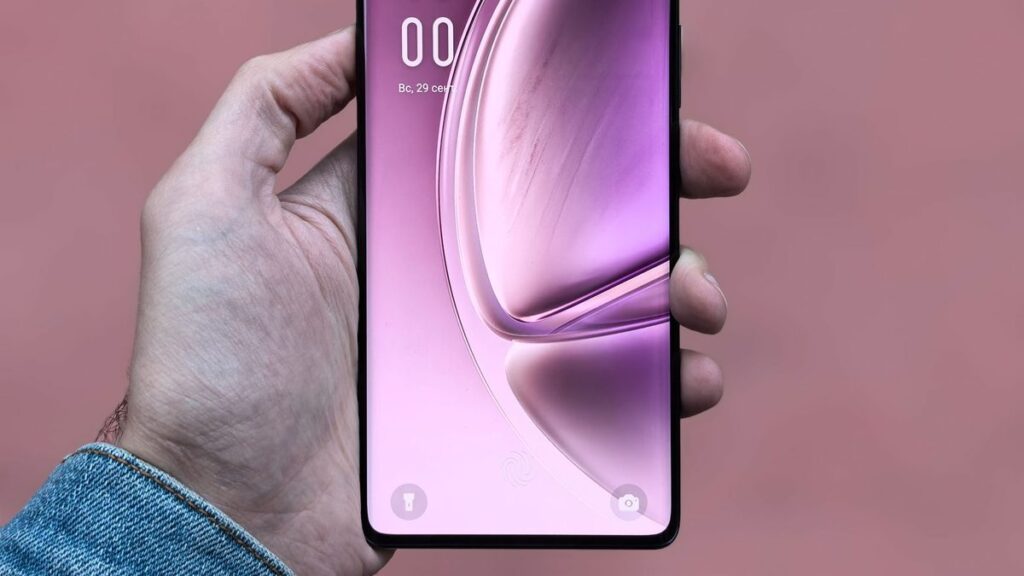
There has been a lot of speculation about which phone Meizu would choose for its Ubuntu device, but it now seems official that the Meizu MX4 has been picked. In a post on Weibo in China, Meizu shared an image of the Meizu MX4 running Ubuntu with the phrase “More than better.” The image also links to the English Meizu website, which suggests the Ubuntu phone will be an international launch.
The post mentions MWC, so that is exactly what we can expect to see at the Canonical stand early next month in Barcelona.
The Meizu MX4 is Meizu’s current flagship and features 2 GB of RAM, a 5.36-inch 1152 x 1920 display, the MediaTek MT6595 processor and a 20.7 megapixel rear camera.
How we got here
This announcement had been a long time coming. Canonical first publicly announced the Ubuntu platform for phones on January 2, 2013, with a developer preview following that February. A crowdfunding campaign for a flagship Ubuntu Edge phone in July 2013 missed its funding target, and for a while Ubuntu on phones was something you could only install on a handful of Nexus devices.
Things started to move in 2014. Canonical released Ubuntu Touch to manufacturers on September 16, 2014, and in November 2014 Meizu and Canonical signed a cooperation agreement that set the stage for Meizu devices running Ubuntu. Then, on February 9, 2015, the BQ Aquaris E4.5 Ubuntu Edition from Spain went on sale in Europe as the world’s first Ubuntu phone. The BQ was an affordable mid-range device. Meizu’s contribution would be something more ambitious: a proper high-end phone running Ubuntu.
What made Ubuntu Touch different
Ubuntu Touch was not just Android with a different skin. Canonical built its interface around what it called “scopes” instead of traditional app grids. A scope was a screen that pulled content of one type together from different sources, so a music scope might show your local tracks alongside results from online services, and a news scope would gather headlines in one place. Navigation relied heavily on swipes from the edges of the screen rather than on buttons.
The bigger idea behind it was convergence: the same platform and apps running on phones, tablets and desktops, so a phone could one day act as a full computer when connected to a screen and keyboard. The MX4 was never pitched as that device, but it was an important step in getting Ubuntu onto hardware people actually wanted to carry.
What happened next
The Weibo teaser was accurate. At Mobile World Congress in March 2015, Meizu presented the Meizu MX4 Ubuntu Edition, making it Meizu’s first Ubuntu Touch device and the second commercially available Ubuntu phone overall, after the BQ.
The hardware was essentially the MX4, with a few differences. The Ubuntu Edition used the same MediaTek MT6595 chip with four Cortex-A17 and four Cortex-A7 cores, but came with 3 GB of RAM, 16 GB of storage and a champagne gold body only. It kept the 5.36-inch 1152 x 1920 display, the 20.7 megapixel rear camera with laser-aided autofocus and the 2 megapixel front camera, in a metal-framed body measuring 144.0 x 75.2 x 8.9 mm and weighing 147 grams.
It went on sale in Europe on June 25, 2015 through an invite-only system, the same approach Canonical and BQ had used to manage demand. Reviews were broadly positive about the phone itself. ZDNet gave it 8 out of 10 and said it “offers a number of high-end hardware features at relatively low cost,” while TechRadar concluded that “Ubuntu Phone has plenty of potential” and praised its build quality and design.
Potential was the key word. The phone was good, but the app selection was limited compared with Android and iOS, and scopes asked users to learn a new way of doing things. Meizu followed up with the PRO 5 Ubuntu Edition, which was shown at MWC 2016 and released in February 2016, but that was the end of the road for Meizu’s Ubuntu phones.
On April 5, 2017, Canonical CEO Mark Shuttleworth announced that the company would stop supporting Ubuntu Touch, citing a lack of market interest. The UBports community took over the project and still maintains it, upgrading its base to Ubuntu 16.04 LTS in 2018 and continuing to support a range of devices that enthusiasts have ported it to.
Why it still matters
The MX4 Ubuntu Edition is a useful case study for anyone who wonders why the phone market settled on two platforms. The hardware was competitive, the reviews were fair, and it had a real company behind it. What it lacked was apps and habits: people buy a phone for what it lets them do on day one, and a new platform starts with a small catalog. That chicken and egg problem has sunk better funded efforts too.
If you want to try Ubuntu Touch today, the path runs through the community rather than a shop. The UBports project publishes a list of supported devices and an installer, and the experience depends heavily on how well each phone has been ported. It is a hobbyist’s platform now, which is a long way from the flagship launch Meizu and Canonical planned in Barcelona, but it is still alive, which is more than can be said for many mobile operating systems of that era.
It also shows what Meizu was like at its most adventurous. In a few months the company shipped phones on Flyme, offered Alibaba’s YunOS in China and launched an Ubuntu flagship in Europe. For the leaks and teasers that led up to this, see Meizu boss hints at Ubuntu phone launch at MWC, and for how the Ubuntu dream first attached itself to Meizu’s budget phones, read Weibo leaks show 5-inch Meizu m1 mini with Ubuntu.