
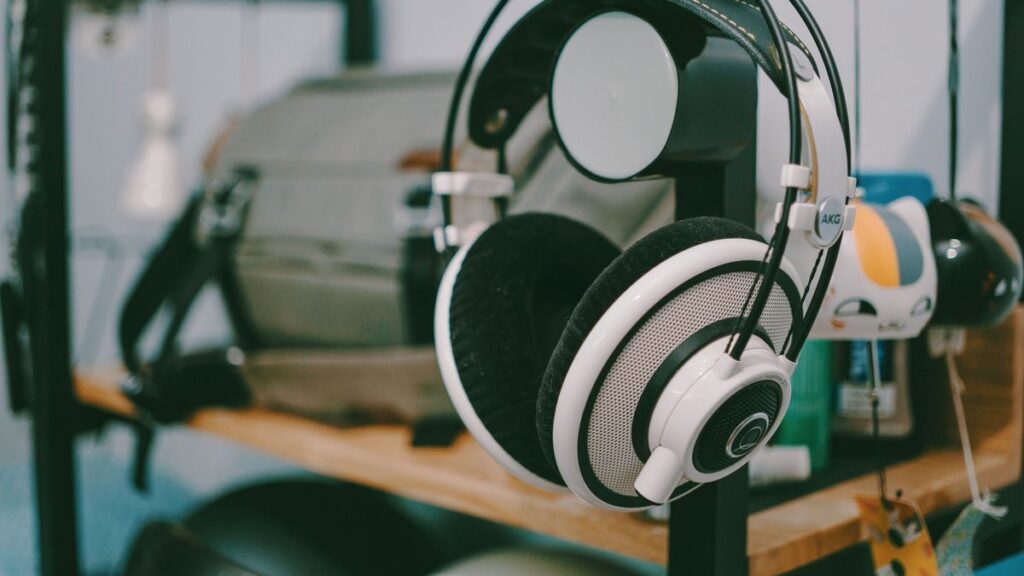
It did not take a genius to work out that Meizu’s upcoming headphones would be made with AKG, but it is nice to finally have confirmation.
Ahead of the Meizu m1 launch earlier this year, Meizu teased that it would be working with a number of third parties. Haier was announced during the event, but audio specialist AKG was teased too.
Until today, no confirmation of an AKG and Meizu partnership had been made, although we had guessed the two would be working on the headphones tipped on Weibo. Now we finally know that AKG is behind the DJ style headphones, and we can expect to see them on April 15.
Stay tuned.
How the confirmation came about
The teasing had gone on for weeks. Meizu posted an empty headphone box with its emblem on it, which was enough to get fans guessing, and the AKG name had been floating around since January, when an official Meizu Weibo post hinted at the partnership ahead of the “Connected” launch. We covered those early hints in Meizu and AKG Acoustics to release headphones.
The confirmation came from a Meizu vice president on Weibo, the Chinese social network where Meizu executives regularly teased, leaked and confirmed products themselves. Earlier in the year, VP Li Nan had done exactly that with the Meizu m1 mini, so fans had learned to watch executive accounts closely. His message was short, but it answered the question fans had been asking: yes, the partner was AKG, and the product was a pair of headphones sold on their own rather than bundled with a phone. That made it Meizu’s first standalone headphone launch, a notable step for a company whose phones were still its main business.
Why a DJ style headphone?
“DJ style” usually describes an on-ear or over-ear headphone with a closed back, a sturdy headband and earcups that can swivel so the wearer can listen with one ear. In practice, the style had become popular far beyond actual DJs, because closed-back designs block out outside noise, leak little sound to the people around you and tend to deliver a punchy, bass-forward sound that suits modern pop and electronic music.
It was also a smart choice for a brand like Meizu. A DJ style headphone looks good in marketing photos, works well with a phone on the move, and sits in a price range where young buyers, the core audience of Meizu’s M series, would consider it.
There was a practical reason too. Phones in 2015 still almost universally had a 3.5mm headphone jack, and wired headphones were how most people listened to music on the go. A good wired headphone was the easiest way for a phone brand to prove its audio claims, because the whole chain, from the phone’s audio hardware and tuning to the drivers in the earcups, could be designed to work together.
What happened next for Meizu audio
The AKG collaboration turned out to be the start of a longer run of audio products under Meizu’s own name, rather than a lasting co-branded line.
- Meizu HD50 (November 2015). Later in 2015 Meizu unveiled the HD50, a headphone with a metal build that it described as its first ever metal headphones. It launched at 399 yuan, around $62 at the time, and reviewers praised its looks and build for the money.
- Meizu Flow (July 2017). Two years later Meizu launched the Flow earphones alongside its PRO 7 phone, at 599 yuan, about $89. Early leaked images of the Flow drew comparisons with AKG’s own K3003 earphones, a sign that the AKG influence on Meizu’s thinking about audio had not gone away.
- Software tuning. Across its phones, Meizu kept the Dirac HD Sound tuning it had first built into Flyme 3.0, and continued to market audio quality as a reason to choose its devices.
Meanwhile, AKG’s own story changed dramatically. Its parent company Harman closed the Vienna headquarters and factory in 2017 and moved the brand’s base to California, and in the same year Samsung Electronics bought Harman. Many people now know AKG mainly from the earphones Samsung has included with some Galaxy phones.
How to judge a pair of headphones like this
Whether you are looking at a co-branded pair or a brand’s own model, a few checks make a big difference:
- Comfort over time. On-ear designs press on the ear itself. Try to wear them for at least 20 minutes before deciding.
- Isolation. A closed back helps on a train or in an office, but it can feel warm on long listening sessions.
- Sound balance. A big bass boost is impressive in a quick demo and tiring after a week. Listen to music you know well.
- Build and parts. Replaceable ear pads and a detachable cable make a headphone last much longer.
- Who did what. A partner logo can mean full engineering involvement or simply a license. Reviews that explain the difference are worth seeking out.
Why it still matters
The Meizu and AKG announcement captured a moment when Chinese phone brands were moving beyond phones and trying to build a wider range of lifestyle products. Today almost every phone maker sells its own earbuds and headphones, and many still lean on famous audio names to add credibility. The lesson from Meizu’s experience is that partnerships can open a door, but it is the brand’s own products that have to keep customers coming back. For more on what separates good audio from good marketing, see our guide on why every wireless standard sounds the same and is not.