
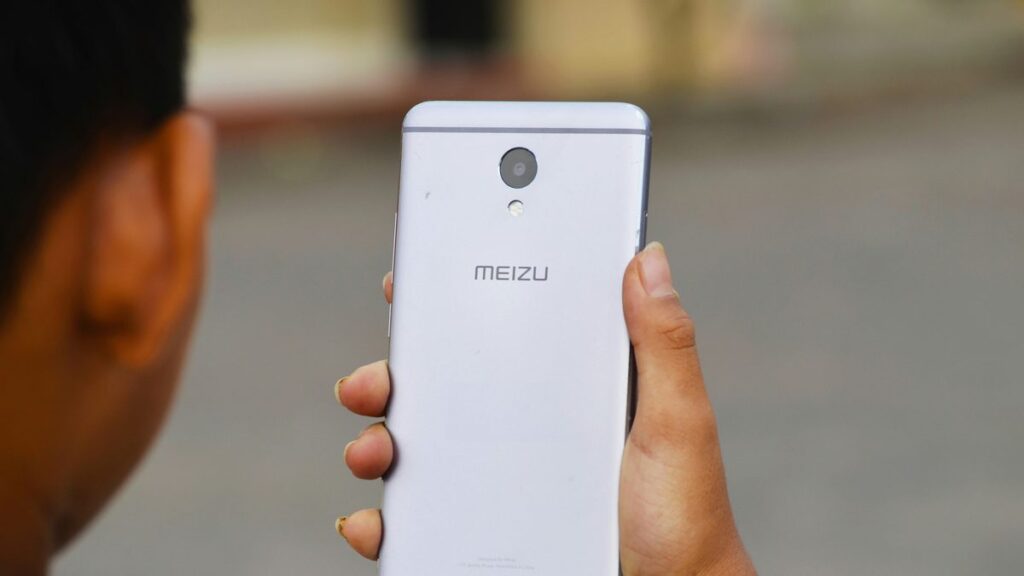
Generally we don’t look to the VP of a company to leak a product only a few days before launch, but once again Meizu has chosen to follow its own path, as VP Li Nan posts the first official photo of the Meizu m1 mini.
On his Weibo, Li Nan said that he had “traveled across China to choose the best color to leak, and this is the most beautiful” (or words to that effect).
What we see in the image is a Meizu m1 mini in a peppermint green color, next to a digital camera in the same color. The image confirms earlier leaks that the new Meizu will have just a single LED flash, and we can see the same volume and power button positions as on the Meizu m1 note.
Although we cannot see the other side of the phone, we can assume the smaller Meizu m1 mini will have a SIM tray like its larger brother and a unibody polycarbonate shell.
As for the rest of the hardware? It seems likely that a 5-inch display, around 2 GB of RAM and a 64-bit MediaTek processor will all be part of Meizu’s new smartphone package.
The executive as the leak
For readers outside China, the idea of a company vice president personally teasing a phone on social media days before launch may seem odd. In China in 2014 and 2015, it was becoming standard practice, and Meizu was one of the brands that leaned into it hardest.
Weibo, China’s big microblogging platform, was where phone fans gathered, argued and speculated. Executives who posted there directly could build a following of their own and reach the most engaged customers without going through advertising or the press. Li Nan was one of the most visible examples at Meizu. In October 2014, for instance, he confirmed on social media that Meizu would launch the MX4 Pro in November and that it would have a 2K screen, weeks before the official announcement.
A controlled “leak” like this one has several advantages over a press release:
- It feels exclusive. Fans who follow the executive get something before everyone else, which rewards them for paying attention.
- It creates news on its own. Sites like this one write it up, and the teaser spreads much further than the original post.
- It shapes the conversation. By choosing which detail to reveal, in this case a bright color and a playful photo, the company decides what people talk about before launch.
- It keeps the big reveal intact. One photo of the back of a phone says a lot about design and nothing about price, which the company can save for the stage.
The playful framing was part of the strategy too. Posing the phone next to a matching camera said this was a lifestyle product for young buyers, not a specification-heavy machine. That fitted the positioning of Meizu’s new budget range perfectly.
What happened next
A couple of days later, on January 28, 2015, Meizu launched the phone as the Meizu m1, without the “mini” suffix. Here is how our guesses from this post held up:
- 5-inch display: correct. The m1 had a 5-inch screen at 1280 x 768.
- 64-bit MediaTek processor: correct. It used the MediaTek MT6732 quad-core chip.
- Single LED flash: correct, next to a 13 megapixel rear camera.
- Polycarbonate body and SIM tray: correct. The m1 had a polycarbonate shell and a tray that took one SIM plus a microSD card.
- Around 2 GB of RAM: wrong. The m1 launched with 1 GB of RAM and 8 GB of storage, one of the few disappointments at launch.
The color story continued at launch, too. The m1 came in a range of bright shades, including a peppermint option, and Meizu offered interchangeable colored back shells, so owners could change the look of their phone. The price was 699 Yuan, and sales began on February 5, 2015. The full specifications are in Meizu m1 officially released for 699 Yuan.
Notice the pattern in that list. Everything visible in Li Nan’s photo turned out to be accurate, because it was the real product. Everything we inferred from outside the photo, like the amount of RAM, was a guess, and the one guess that went wrong was the one that mattered most to spec-focused buyers. An official teaser is reliable about what it shows and silent about the rest, and it pays to keep those two things separate when you read one.
Color as a feature
It is easy to forget how unusual this was for a phone at the time. Most phones in 2015 came in black, white, silver or gold. Budget brands had used bright plastic before, but Meizu made color the main message of its launch marketing, and the Meilan range became known for it.
Other brands have borrowed the idea many times since, with bold finishes used to make affordable phones feel special without adding cost. A different color costs almost nothing to produce, but it can make a cheaper phone feel like a deliberate choice rather than a compromise.
Why it still matters
Executive teasers are now completely normal. Company leaders across the industry post camera samples, design hints and countdowns on social media before almost every launch, and the Chinese brands that pioneered the approach on Weibo helped make it standard.
The lesson for readers is to enjoy these teasers for what they are: marketing that happens to be accurate about the things the company wants you to see. The detail an executive chooses to show is usually true. The details they leave out, like RAM and price, are where your expectations should stay loose, as this post proved. For another look at how the m1’s design leaked before launch, see Yellow Meizu m1 mini spy photo shows single LED flash.