
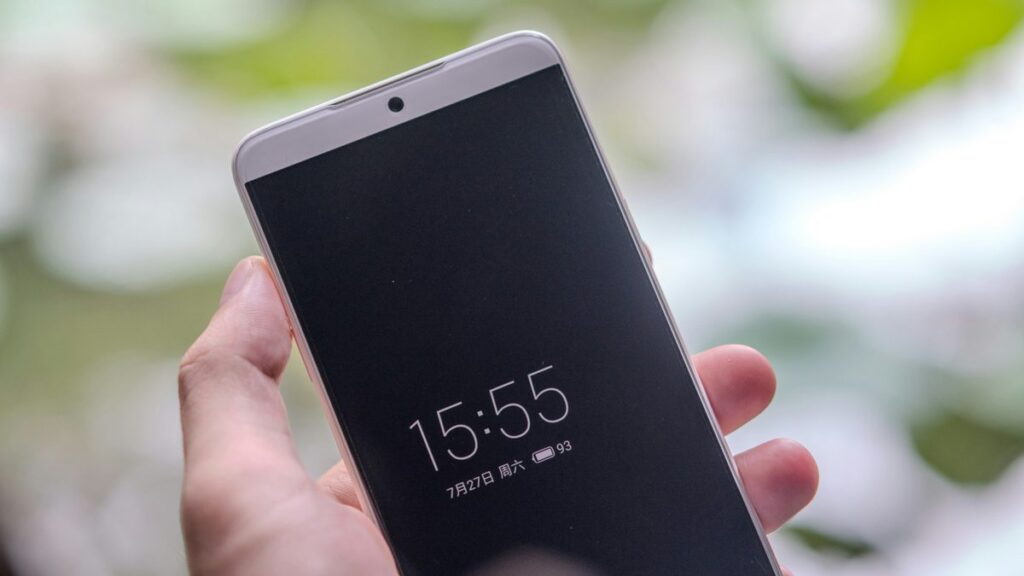
Just moments ago Meizu announced the full details and specifications of the Meizu m1. Here is everything you need to know.
Meizu released its first phone of 2015 today, and rather than launching a flagship device (like Xiaomi), it released an entry-level phone costing only 699 Yuan. So far only the China Mobile TD version of the phone has been officially listed, but we can look at the specs ahead of the WCDMA/FDD version being announced.
As we expected, the Meizu m1 has a 5-inch display, but with a slightly higher resolution of 1280 x 768, giving a pixel density of around 300 ppi. Above the screen, a generous 5 megapixel front camera with an f/2.0 aperture is ready for selfies and uses the same FotoNation technology as the camera on the m1 note.
Also similar to the m1 note is the unibody polycarbonate shell. The m1 comes in blue, green, yellow, white, pink and peppermint blue.
The rear camera uses the same 13 megapixel sensor as the Meizu m1 note, but this time with a single LED flash.
Inside, the Meizu m1 has the quad-core MediaTek MT6732 processor running at 1.5 GHz. This is MediaTek’s 64-bit four-core chip and supports 4G LTE, although so far the phone supports only TD-LTE. The SIM tray takes a single SIM and a microSD card of up to 128 GB. There is 8 GB of internal storage and 1 GB of RAM.
The Meizu m1 measures 140.2 x 72.1 x 8.9 mm and weighs only 128 g. The final pieces of the puzzle are a built-in battery, Bluetooth 4.0, dual-band Wi-Fi, GPS and GLONASS.
The m1 at a glance
| Spec | Meizu m1 | Meizu m1 note (for comparison) |
|---|---|---|
| Launch | January 28, 2015 | Announced December 23, 2014 |
| Display | 5.0 inch, 1280 x 768 | 5.5 inch, 1080 x 1920 |
| Processor | MediaTek MT6732, 4 cores | MediaTek MT6752, 8 cores |
| RAM | 1 GB | 2 GB |
| Storage | 8 GB plus microSD | 16 GB or 32 GB |
| Cameras | 13 MP rear, 5 MP front | 13 MP rear, 5 MP front |
| SIM | Single SIM | Dual SIM |
Reading the spec sheet
The m1 was built around a clear trade-off: keep the things people notice every day, and cut the things they only notice on a spec sheet. The camera setup was essentially the same as the more expensive m1 note, and the 64-bit processor was modern for the time. The cuts were storage, RAM and the second SIM slot.
The unusual 1280 x 768 resolution was a nice touch. Many budget phones of the time used 1280 x 720, so the m1’s screen had a little extra width and a slightly sharper image than rivals at the same size. And the colorful polycarbonate body, with interchangeable colored back shells, gave the phone a personality that many budget handsets lacked.
The most controversial choices were the single SIM and the 1 GB of RAM. In China, dual SIM was a popular feature, and the rival Xiaomi Redmi 2 was about to be offered with 2 GB of RAM. We looked at Meizu’s response to that pressure in Meizu m1 M456A gets upgrade to 2GB RAM.
Why TD-LTE first?
The first m1 listed was the China Mobile version, and that tells you who Meizu was selling to. China Mobile was the country’s largest carrier and had built its 4G network on TD-LTE, the time-division flavor of LTE. A phone that supported TD-LTE on day one could be sold to the biggest pool of 4G customers in China, which mattered far more to a 699 Yuan phone than international compatibility.
The flip side was that early versions were a poor fit for buyers outside China, where most carriers used the frequency-division flavor, FDD-LTE, and WCDMA for 3G. Importers and fans abroad had to wait for the other network versions, and even then, band support could vary from model to model. That remains good advice for anyone importing a phone today: check the supported bands against your carrier before you buy, not after.
A 64-bit chip in a budget phone
The MT6732 was part of the first wave of 64-bit processors in affordable phones. In early 2015 the real-world benefit was modest, because Android and most apps were only starting to take advantage of 64-bit hardware. But it meant the m1 was not built on a dead-end architecture, and it was a sign of how quickly features that had been flagship talking points were reaching budget devices.
What happened next
The m1 went on sale in China on February 5, 2015, at the announced 699 Yuan. It was the second phone in Meizu’s M series, which the company had introduced in December 2014 with the m1 note to offer strong features at a lower price. In China the series was sold as Meilan.
The m1’s successors fixed its weak points quickly. The M2 Note, unveiled on June 2, 2015, and the Meizu M2 both moved to MediaTek’s MT6753 octa-core processor, shipped with Flyme 4.5 based on Android Lollipop and added a physical home button with Meizu’s mBack gestures. The M2 Note came with 2 GB of RAM as standard.
The M series kept growing through 2016, while the company changed hands in the years that followed. Geely’s DreamSmart subsidiary took control of Meizu in 2022, and in February 2024 Meizu said it would leave the traditional smartphone business to focus on AI, before continuing to release phones such as the Meizu 22 in September 2025.
Why it still matters
Looking back, the m1 is a textbook example of how to build a budget phone that people actually like. It did not try to be a cheaper flagship. It kept a good camera, a sharp enough screen and a fun design, and it saved money on the parts most buyers would never think about in a shop.
That formula still works. If you are shopping for an affordable phone today, focus on the things you will notice every day, like the screen, the camera, the battery and how long the software will be updated, rather than chasing the biggest number on the box. We look at those trade-offs in what a mid-range phone gives up, and you can see what was inside the m1’s bigger brother in our Meizu m1 note teardown.