
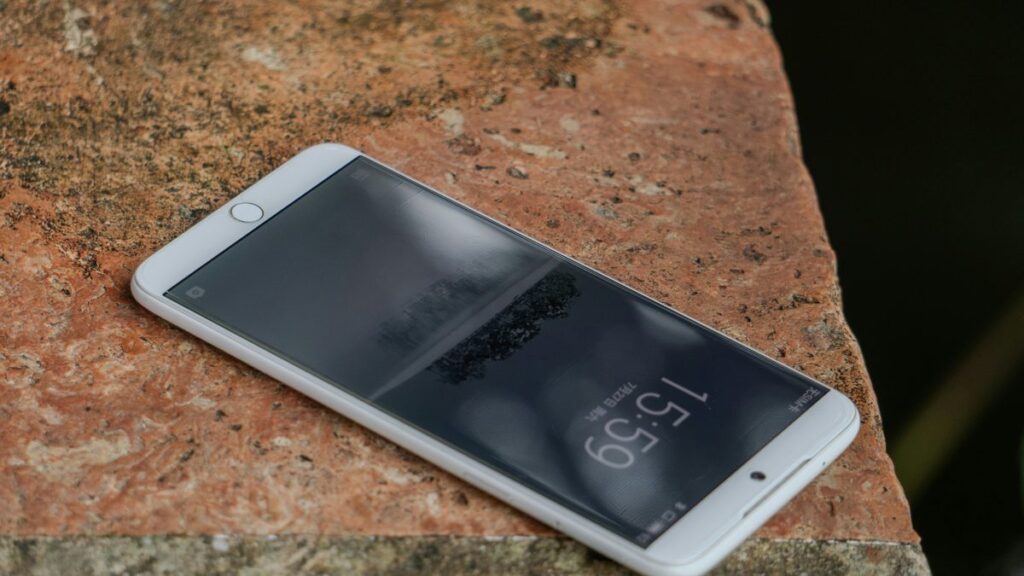
The excitement of today’s Meizu m1 launch almost buried the fact that Meizu is now offering phones with Qualcomm Snapdragon processors in China!
Meizu is a long time partner of Samsung, and late last year it began working with MediaTek on its phones as well, but until today Meizu had never partnered with Qualcomm.
During the launch event for the Meizu m1 and the related “Connected” products, it was also announced that a special version of the Meizu m1 note would be launched for China Telecom’s CDMA network. This version of the m1 note is not powered by the 64-bit MT6752, but by a Snapdragon 615 chip from Qualcomm.
Looking over the specifications of the Snapdragon powered m1 note, we also see that the phone uses Qualcomm’s Adreno 405 GPU and apparently supports TD-LTE, FDD-LTE and GSM. Another difference is the price: the Qualcomm version of the m1 note costs 1099 Yuan.
Meizu bosses spoke after the launch about their relationship with Qualcomm being very good, and hinted that future cooperation could be on the cards!
Why the chip inside a phone depended on the network
To a buyer outside China, a second version of the same phone with a different processor might seem odd. In 2015 it made perfect sense, and the reason was the network.
China had three big carriers, and they did not all use the same technology. China Telecom’s older network was based on CDMA, a standard that Qualcomm had championed for years and that it held many of the key patents for. Chips from other vendors often did not support CDMA well, or at all. If a phone maker wanted to sell a handset that worked properly on China Telecom, the simplest route was usually a Qualcomm chip.
That is exactly what happened here. The regular m1 note used MediaTek’s MT6752, an octa-core chip with Cortex-A53 cores that gave the phone excellent performance for its price. For the China Telecom model, Meizu swapped in the Snapdragon 615, another octa-core design built on Cortex-A53 cores, paired with Qualcomm’s Adreno 405 graphics. On paper the two versions were close in performance. The real difference was in the modem and the networks each phone could talk to.
A quick reminder of what the m1 note was
The m1 note was the phone that started Meizu’s M series. It was announced in China on December 23, 2014 and released in early January 2015, positioned as a quality phone for young buyers at a low price. For the money, it was remarkably well specified:
- 5.5-inch 1920 x 1080 display with Gorilla Glass 3
- MediaTek MT6752 octa-core processor with 2 GB of RAM
- 13 megapixel rear camera with a dual-tone flash and a 5 megapixel front camera
- 16 GB or 32 GB of storage
- 3,140 mAh battery
- Flyme 4 on top of Android 4.4.4 KitKat
The Qualcomm version kept the same basic formula and the same design, and simply changed the platform underneath to suit China Telecom. If you want to see what was inside the regular model, our Meizu m1 note teardown takes it apart piece by piece.
What happened next
The Snapdragon m1 note turned out to be an early step rather than the start of a full switch. Through 2015 and 2016 Meizu continued to rely heavily on MediaTek for its budget and mid-range phones and on Samsung’s Exynos chips for its top models. The MX4 Pro had used Samsung’s Exynos 5430, and the flagship PRO 5, launched in September 2015, used the Exynos 7420, the same chip found in Samsung’s own flagships that year. MediaTek powered the M2, the M2 Note, the MX5 and the 10-core Helio X25 inside the PRO 6.
The prediction that cooperation with Qualcomm “could be on the cards” did eventually come true, just later than fans expected. By the end of the decade Qualcomm chips were at the heart of Meizu’s flagships. The Meizu 16s, announced in April 2019, used the Snapdragon 855, and the Meizu 17, released in May 2020, used the Snapdragon 865 with LPDDR5 memory and UFS 3.1 storage. By then, the idea of a Meizu flagship with anything other than a Qualcomm chip would have seemed strange.
Why it still matters
This small launch-day footnote tells a bigger story about how phones are made. The processor is not just about speed. It decides which networks a phone can use, how quickly it gets software updates, and sometimes which markets it can be sold in at all. A phone maker’s choice of chip is often a business and network decision first and a performance decision second.
It still matters when you buy a phone today. Two models with the same name can have different chips in different regions, with different battery life, camera processing and update schedules. Before you buy, it is worth checking which version is sold where you live, and making sure it supports the network bands your carrier uses. The m1 note’s two versions are an early, very clear example of why.
What to check when a phone comes in two versions
- The model number. Regional variants usually carry different model codes, and those codes are the quickest way to tell them apart in a listing.
- The network bands. Compare the supported LTE and 5G bands with the ones your carrier uses. A phone that lacks a key band can struggle indoors or in rural areas.
- The software. Phones sold for one region may ship with a different software build, different preinstalled apps or a different update schedule.
- The warranty. An imported variant bought online may not be covered by the manufacturer in your country.
- The reviews. Make sure the review you are reading tested the same chip you are buying, since battery life and heat can differ between versions.