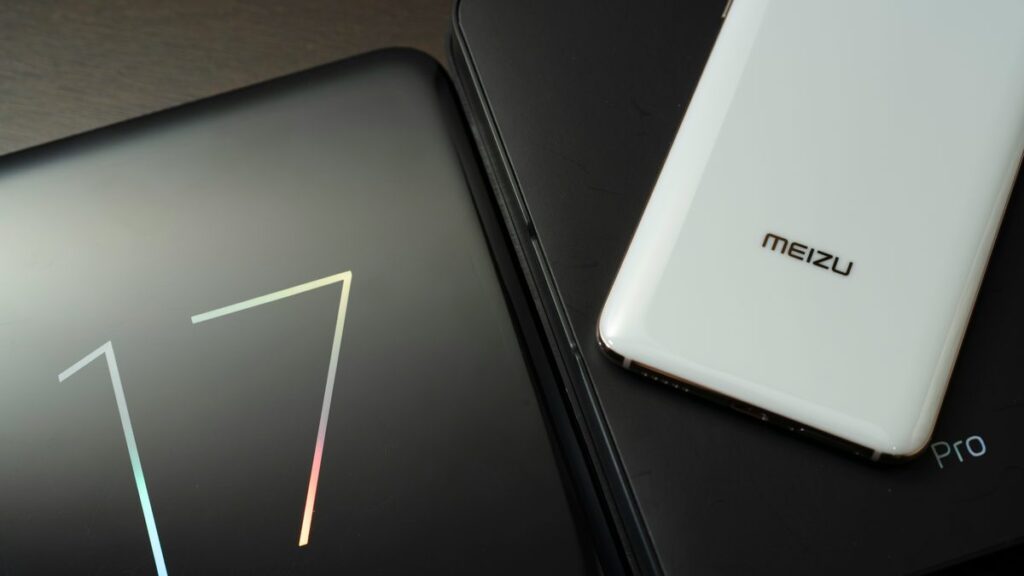
Meizu founder Jack Wong (Huang Zhang) has confirmed on his Weibo that Meizu will unveil a new device at MWC next month, focused on the international market.
A few weeks ago we reported that sources at Canonical had confirmed they would show a new Ubuntu phone at MWC. Now the Meizu boss has confirmed that a new device aimed at international phone fans will be at the show.
As Meizu is not officially listed as an exhibitor at MWC in Barcelona, we can assume the device he is referring to is the Ubuntu Meizu phone. In the past the Meizu MX3 was shown at MWC running Ubuntu, and this year we believe it will be either the Meizu MX4 or the MX4 Pro.
Whichever Meizu device is revealed at MWC, it is believed it may ship with a dual boot system that lets users switch between Ubuntu and Meizu’s Flyme OS.
Why an Ubuntu phone mattered to Meizu in early 2015
To understand why a short Weibo post caused so much excitement, it helps to remember where Meizu stood at the start of 2015. The company from Zhuhai had spent a decade building a loyal following at home, first with MP3 players and then with phones such as the M9, its first Android handset in 2011, and the MX series that followed. Outside China, though, Meizu was still a name that only enthusiasts knew. It had opened offices in Hong Kong and Russia in 2011 and pushed into France, Italy and Eastern Europe in 2014, but it had nothing like the international profile of its big domestic rivals.
Canonical, the company behind the Ubuntu desktop operating system, had its own ambitions. It had released the first developer version of Ubuntu Touch in October 2013 and made the software available to manufacturers in September 2014. What it lacked was hardware partners willing to sell real phones to real customers. Meizu was one of the first names attached to the project, and its hardware had a reputation for quality at a sensible price.
For Meizu, an Ubuntu phone was a way to be talked about in Europe for reasons other than price. For Canonical, Meizu offered a well-built flagship to put its software on. On paper it suited both sides.
The competition Ubuntu was walking into
It is worth remembering how crowded the “third platform” space was at the time. Android and iOS dominated completely, and several challengers were chasing the same small slice of users who wanted something different. Firefox OS was targeting cheap phones in emerging markets, Tizen was backed by Samsung, and Jolla’s Sailfish OS was courting the same Linux enthusiasts Ubuntu hoped to win. Ubuntu’s pitch was different: a phone built around “scopes,” content panels that pulled information together instead of forcing you to open app after app, and the long-term dream of convergence, where one device could act as a phone and, once plugged into a screen, a desktop computer.
That vision appealed to developers and Linux fans. The open question was whether it could appeal to anyone else.
What happened next
The Weibo hint turned out to be right. At Mobile World Congress in March 2015, Meizu presented the Meizu MX4 Ubuntu Edition, a version of the MX4 running Ubuntu Touch instead of Flyme. Rather than the dual boot setup that had been rumored, it was a separate edition of the phone with Ubuntu as its operating system.
The hardware was the regular MX4, announced in Beijing in September 2014: a 5.36-inch 1920 x 1152 display, a MediaTek MT6595 octa-core chip with four Cortex-A17 and four Cortex-A7 cores, 2 GB of RAM and a 20.7 megapixel rear camera with laser-aided autofocus, all in a metal-framed body weighing 147 grams. It was a genuinely good phone for its price, and reviewers at the time praised the display and build quality.
The MX4 Ubuntu Edition went on sale in 2015, a few months after the BQ Aquaris E4.5 Ubuntu Edition became the world’s first Ubuntu phone in February, making the Meizu the second commercially available Ubuntu Touch device. Meizu followed it up with the PRO 5 Ubuntu Edition, shown at MWC 2016 and released in 2016, which paired Ubuntu with a much more powerful Samsung Exynos 7420 chip.
Reviewers who tried the Ubuntu phones tended to like the interface, the responsiveness and the regular updates, and the absence of advertising. The problem was apps. With a tiny user base, few developers built for the platform, and without apps, few buyers were interested. On April 5, 2017, Canonical CEO Mark Shuttleworth announced that the company would stop supporting Ubuntu Touch because of a lack of market interest. The project was picked up by the community group UBports, which still develops Ubuntu Touch today, and which supports a range of devices.
If you want to follow the story from the start, our earlier reports cover how Ubuntu first leaked onto a Meizu m1 mini and how Meizu later confirmed the MX4 would be shown with Ubuntu at MWC.
Why it still matters
The Meizu Ubuntu phones never sold in large numbers, but they were an important test. They showed that a respected hardware maker could ship a phone with a genuinely different operating system, and they showed just how hard it is to break the Android and iOS duopoly without an app ecosystem to match. Every alternative mobile platform since has run into the same wall.
For Meizu, the experiment also said something about the company’s character. It was willing to try unusual partnerships to stand out, from Ubuntu with Canonical to YunOS with Alibaba for the Chinese market. That appetite for experiments is part of why the brand still has fans more than a decade later, even as the company itself has changed hands and direction under new ownership.
If you are shopping for a phone today, the lesson from the Ubuntu years is simple: the operating system and the promise of long-term software support matter as much as the hardware. A beautiful phone without apps or updates is a short-lived one.